Fraud Blocker ProSoft® REPREVE® PUL - Food-Safe & Recycled | Wazoodle Fabrics
skip to content
Skip to content

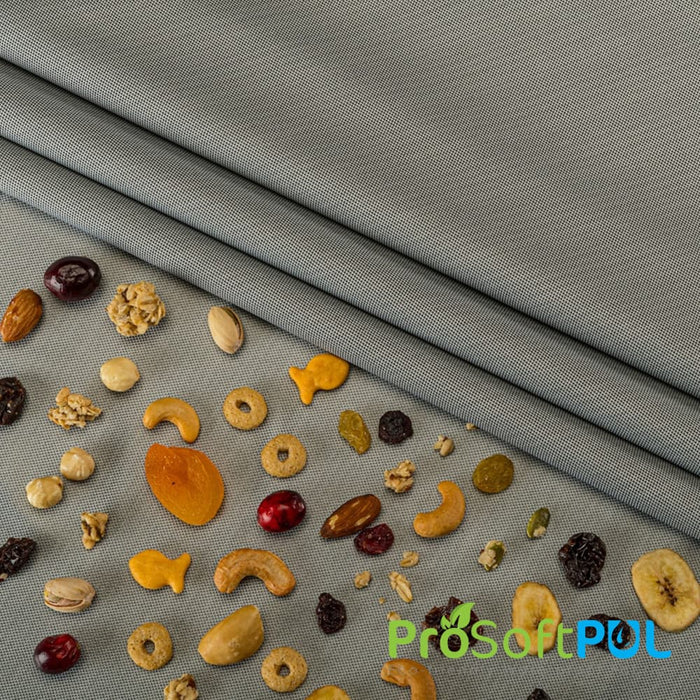
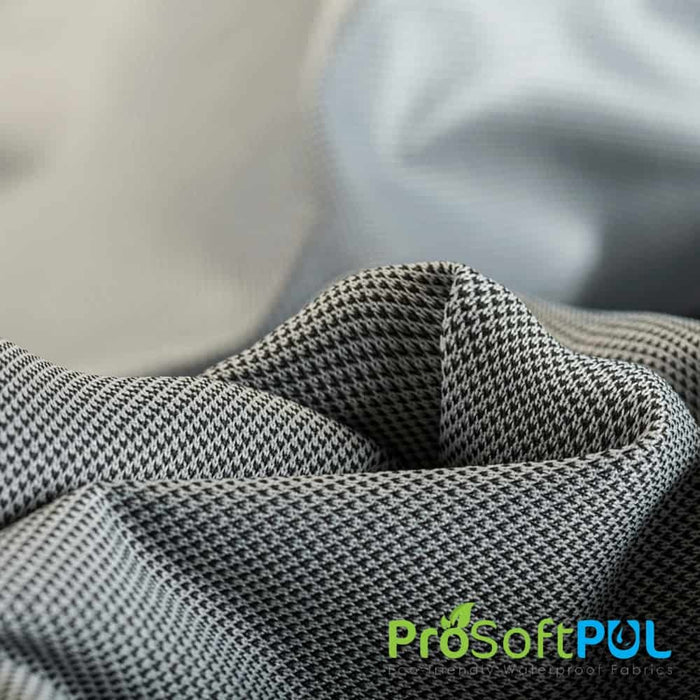
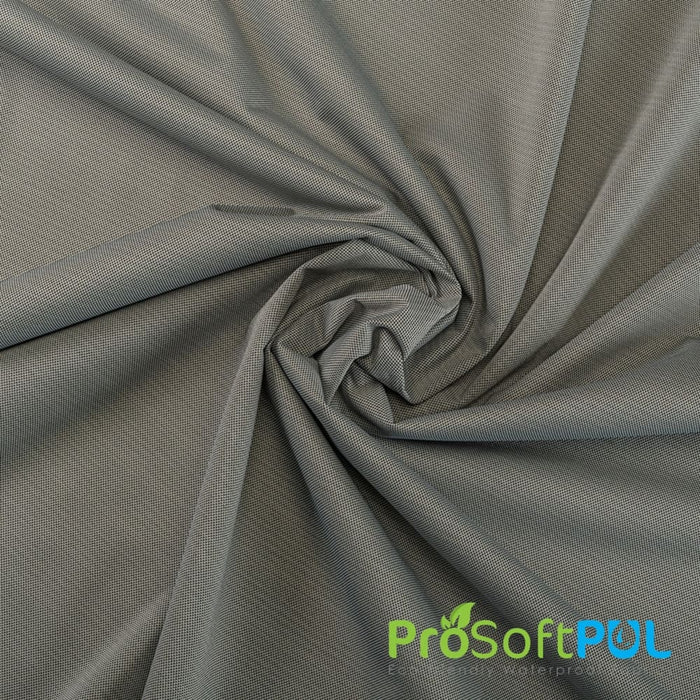
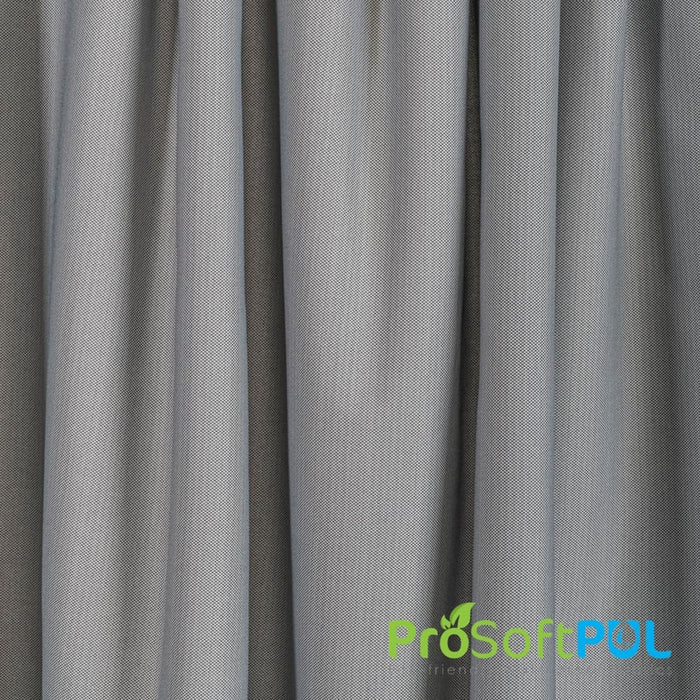
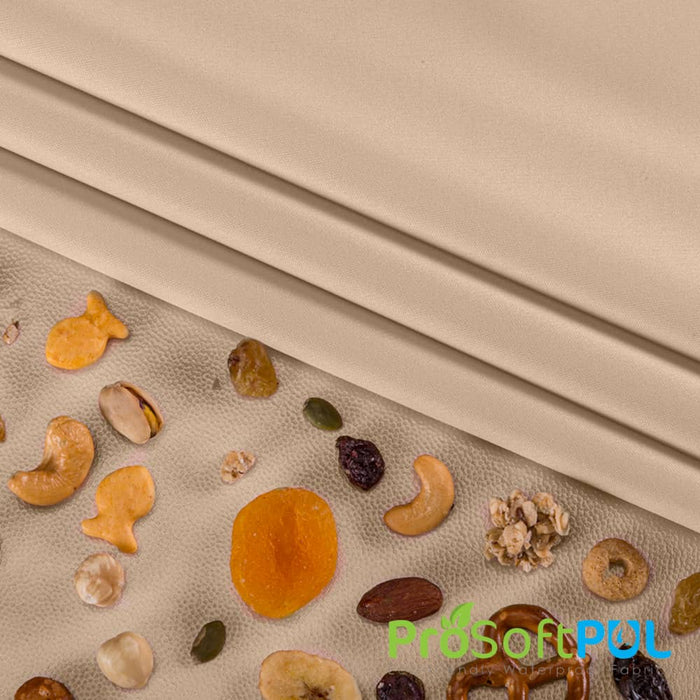
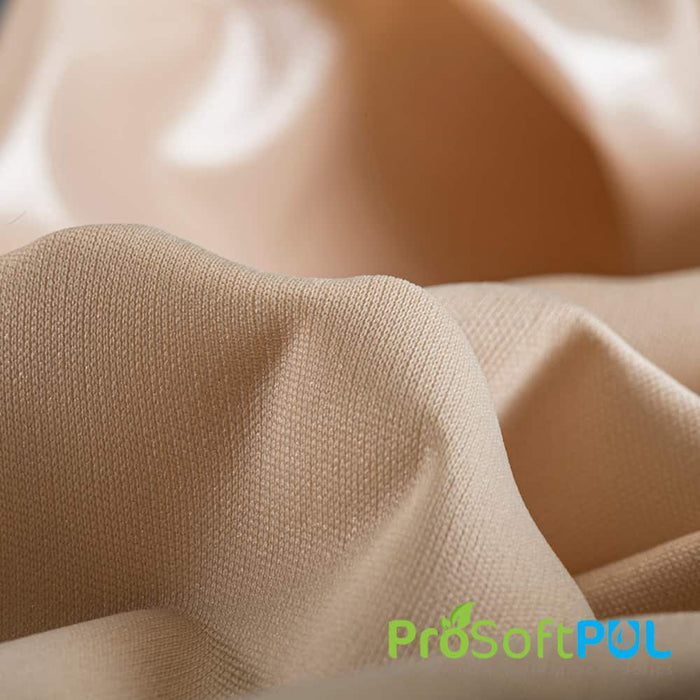
ProSoft FoodSAFE® REPREVE® Waterproof PUL Fabric (W-392)

Original price $2.00 USD - Original price $800.00 USD
Original price $2.00 USD
$1.00 USD
$1.00 USD - $500.50 USD
Current price $1.00 USD
SKU
Choose a Color
Choose a Length

The fabric · what FoodSAFE REPREVE adds, and why you’d reach for it

The same line that holds — certified for food, on a recycled base.

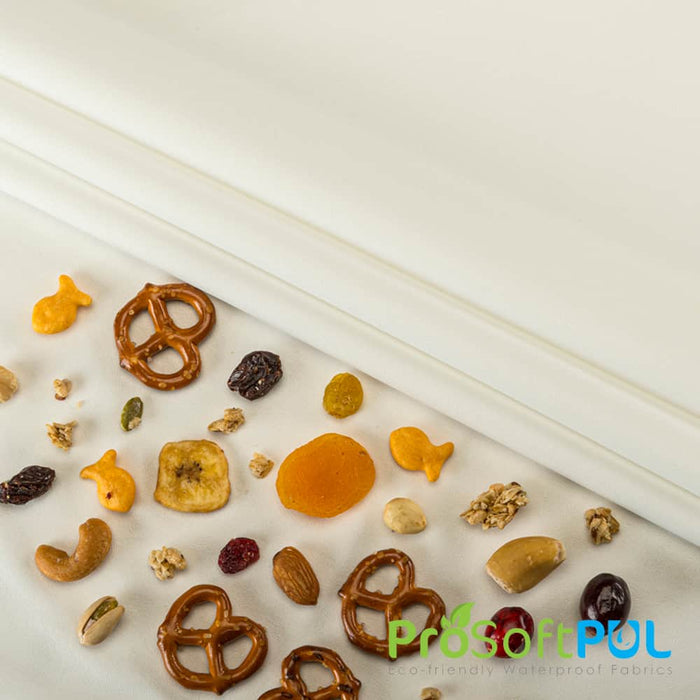
This is the Standard barrier carrying the two credentials at once that usually don’t come together: FDA food-contact certification and a certified recycled base. It is, in fact, the only recycled-content PUL certified for direct food contact — the reason this variant exists is that the combination is rare.

The certification is the same as solid FoodSAFE: 21 CFR 177.1680 and 175.300, both fabric and film sides tested safe for direct contact with all food types, freezer to 250°F. The base is certified recycled polyester, diverting about 12 plastic bottles per yard, and it shares the standard platform’s 0.018″ thickness — waterproof performance matches exactly. Reach for it when a food product also has to carry a recycled-content promise.

One honest note: both additions are credentials, not performance changes. Under the certification and the recycled base, it performs like the Standard — the value is in what it lets you truthfully say about the product.

So when would you choose FoodSAFE REPREVE?

When a food-contact product also needs verified recycled content — a reusable snack bag or wrap for a brand that has to prove both food safety and sustainability. If you only need food certification, solid FoodSAFE (W-396) is simpler; if you only need recycled content, REPREVE (W-675) is the base. This one is for when the product has to prove both at once.

Onlyrecycled PUL certified for food
12bottles diverted / yard
250°Ffreezer to 250°F
300+washes, still waterproof

Test it yourself — the makers do.

The barrier you check; both credentials you take on the certification.

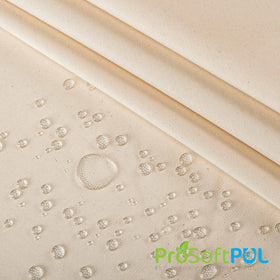
Drop water on the film side

It stays out — exactly like the Standard.

Water beads on the film side and the reverse stays dry — same 0.018″ barrier, same 300+ washes. Neither credential changes what the barrier does.

Then trust two certifications at once

Food-safe, both faces — and recycled, verified.

FDA food-contact certification (21 CFR 177.1680 and 175.300, both faces, freezer to 250°F) on a certified recycled base of roughly 12 bottles a yard. The only PUL that carries both — and the whole reason to choose it.

Makers reach for FoodSAFE REPREVE when a food product also has to answer for its materials — the reusable food goods for brands that must prove safety and sustainability in the same breath.

Also in this family — drop a credential you don’t need

Only need food-safe?

FoodSAFE (W-396) — certified, standard base, simpler.

→
Only need recycled?

REPREVE (W-675) — recycled base, uncertified for food.

→
Want a food-safe pattern?

FoodSAFE Print (W-512).

→

Unsure? Tell us whether the product must prove food safety, recycled content, or both — only this one proves both.

The line is drawn once, and it holds. FoodSAFE REPREVE carries the two promises that rarely travel together — certified for food, and verifiably recycled. For the products that must make both, this is the only one that can.

The truth · how it holds the line

ECO-Thermal Bonding

A waterproof barrier has to do two things that fight each other: stop liquid completely, and still breathe and move like cloth. Here’s how this one does both — starting with the bond that makes it permanent.

300+ wash cycles — still waterproof, the film still fused. The bond is permanent because there’s no glue in it to fail.

Chamber 01

The fuse

The waterproof film is bonded to the knit by heat alone — ECO-Thermal Bonding — with no glue, no solvent, nothing placed between the layers. So there is nothing between them to soften and separate. Where glued PUL fails, the adhesive lets go; this has no adhesive to let go.

Chamber 02

The barrier

Waterproof 300X: it holds liquid out under real pressure — 225 psi hydrostatic (ASTM D751) — and keeps holding it through 300+ wash cycles. The event stays on one side, the world stays on the other, and the line does not move.

It breathes — the both

Most “waterproof” means airtight. This doesn’t. It passes about 850 g/m² of moisture vapor a day (MVTR, ASTM E96) — so worn against a body for hours it stays a barrier without becoming a sweatbox. Liquid water can’t get through; water vapor can. Waterproof and breathable, at the same time.

The honest trade-off — it’s a barrier, not an absorber

It stops liquid; it doesn’t soak it up. That’s the whole job — but it means for anything that catches fluid you pair it with an absorbent core above (like Zorb), and for a fully waterproof product you seal or enclose your seams, because a plain needle line is a row of small holes. SilentFlex keeps it draping like cloth through all of it, never crinkling like plastic.

FoodSAFE — certified for direct food contact

This variant carries FDA food-contact certification under 21 CFR 177.1680 and 175.300 for repeated-use food storage. Both the fabric side and the film side are tested safe for direct contact with all food types, from freezer temperatures up to 250°F — and it does it on a certified recycled base. It is the only recycled-content PUL certified for direct food contact.

Certified — and free of what shouldn’t be there

The proof, and the honest limits.

ProSoft 1 mil ECO-PUL is CPSIA certified — Consumer Product Safety Improvement Act, sections 101 and 108 — the mandatory U.S. federal standard for children’s products (lead, phthalates, flammability). Also California Prop 65 compliant, EU REACH SVHC compliant, and EU RoHS compliant. Made in the USA by AKAS Tex.

And the absences, verified

Forever Chemicals-Free

no PFAS · PFOA · PFOS

BPA-Free
Phthalate-Free
Lead & Heavy-Metals-Free
Solvent-Free Bond

heat-fused — no laminating adhesives

Made in USA

domestic supply chain, AKAS Tex

Forever Chemicals-Free is the one worth pausing on: most waterproof and coated fabrics reach for PFAS to shed water. This one doesn’t — the waterproofing is the fused film itself, not a chemical finish. That’s the difference between this and the category it sits in.

One honest boundary — fabric vs. finished product

CPSIA certification of the fabric does not automatically certify your finished product. Depending on how you construct and seal it, your finished item may need its own testing. The validation begins with us. It passes through you. It lands with the person who receives what you made — and now you know exactly what to tell them.

From Arch

The full truth — before you buy

I want you to know a few things before you buy this, because I’d rather you hear them from me than find them after.

First: it can arrive with a faint smell.

A light manufacturing odor from the thermal bonding process — not a chemical to worry about. A wash and some open air clear it. Being honest, for a few people it fades rather than vanishing at once; if yours has a scent, wash it and let it breathe before you cut.

Second: it’s a barrier, not an absorber.

It stops liquid; it doesn’t soak it. For anything that catches fluid — a diaper, a pad — pair it with a Zorb core above it. It’s the layer that holds the line, not the one that drinks.

Third: care is everything.

Fabric softener, dryer sheets, chlorine bleach, and high dryer heat will end the bond — permanently. The Care tab names all of them. Nothing else on this page matters if softener touches it.

Fourth: seal your seams.

A plain seam resists water, but the needle line is a row of small holes. Tape or enclose your seams for anything that has to be fully waterproof.

Fifth: our certification covers the fabric, not your finished product.

Depending on how you build it, your item may need its own testing. That boundary is real, and respecting it protects the people you sew for.

Waterproofing is exactly where the forever chemicals hide — most PUL and coated fabrics carry PFAS. Ours doesn’t; the barrier is the film itself, not a chemical finish sprayed on. It’s made in the USA by AKAS Tex — our family’s manufacturing company — finishing in Bensalem, Pennsylvania.

Sew well.

— Arch

Bensalem, Pennsylvania

Specifications

The instrument panel.

ProSoft FoodSAFE REPREVE Waterproof 1 mil ECO-PUL (W-392): the only recycled-content PUL certified for direct food contact.

All specifications may vary ±10% per textile industry manufacturing standards.
Specification W-392 · FoodSAFE REPREVE
Weight 155 GSM (4.6 oz/sq yd)
Thickness 0.018″
Width 58″–60″
Fiber composition 75% polyester / 25% polyurethane
Waterproof rating (hydrostatic) 225 psi — ~158,000 mm H2O (ASTM D751)
Base fiber Certified recycled polyester (REPREVE) — ~12 plastic bottles diverted per yard
FDA food-contact Certified — 21 CFR 177.1680 & 175.300, repeated-use food storage
Food-contact faces Both fabric & film sides — all food types, freezer to 250°F
Wash durability 300+ cycles, still waterproof
Breathability (MVTR) 850 g/m²/24h (ASTM E96)
Burst strength 152 psi (ASTM D3786)
Stretch (width) 10%
Stretch (length) Minimal
Edge finish None — cuts clean, self-finishing
Shrinkage Minimal, both directions
UPF 25–35 (darker colors test higher)
pH 7.4 (neutral)
Treatments available FoodSAFE REPREVE (this) · Standard · FoodSAFE · REPREVE
CPSIA Certified
Made in USA Yes — AKAS Tex

The workbench

How to cut it, sew it, and build with it.

Before you sew: clips, not pins

Every pin is a hole, and every hole is a place water gets through. Hold your seams with Wonder Clips or hem clips, never pins. It’s the first rule PUL makers learn and the one they never unlearn — a waterproof barrier is only as waterproof as the holes you didn’t put in it.

Station 01

Cutting

The laminate edge is self-finishing — it won’t fray, so no serging or edge treatment is needed. Cut cleanly to your pattern. Face the film side toward the wet side; the knit side is the side you’ll usually want against skin or showing.

Give it a wash before the first cut to clear any manufacturing residue. It shrinks very little, so cutting before or after washing is fine — the wash is for residue and odor, not dimension.

Station 02

Sewing

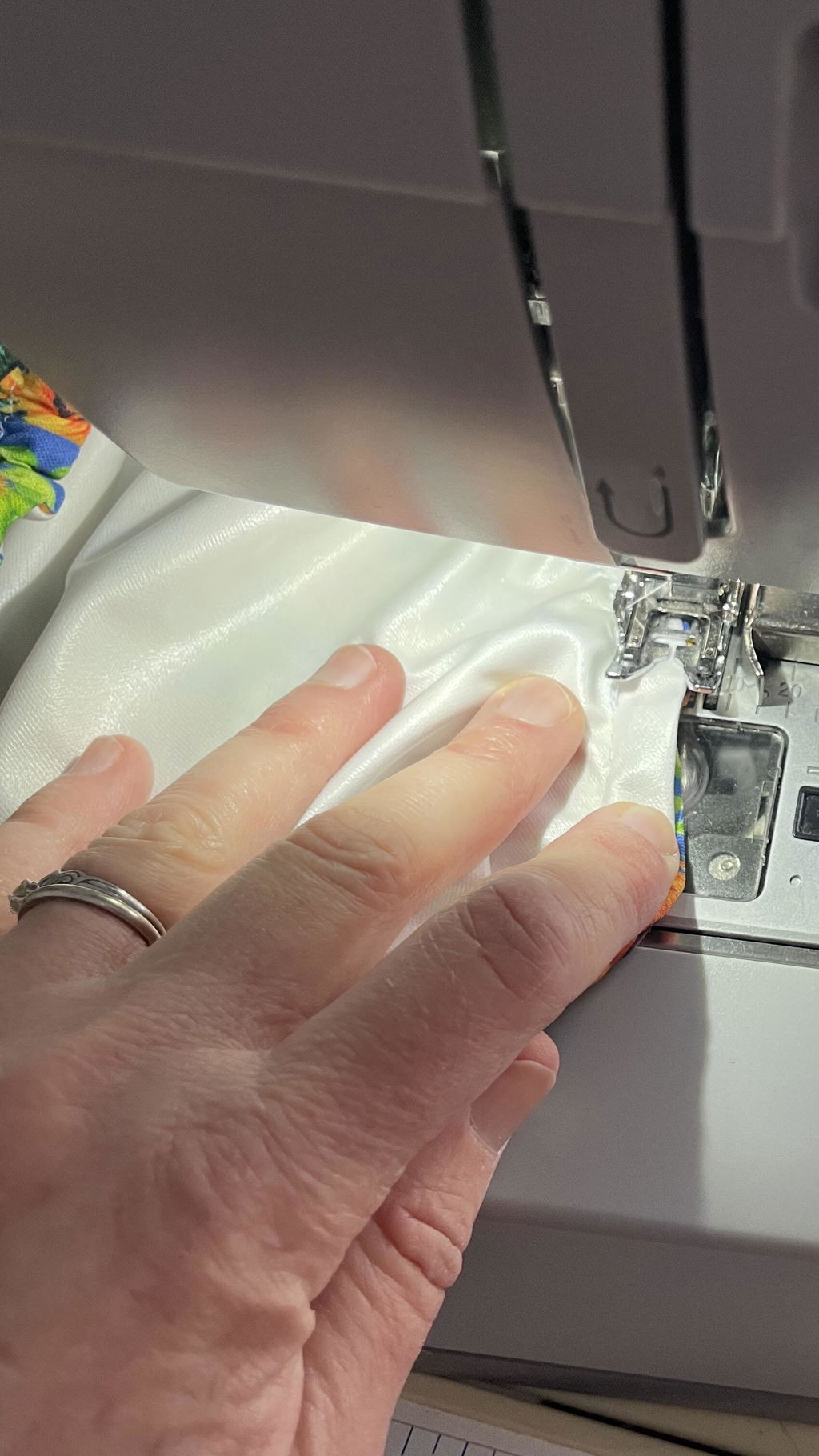
Needle: a universal or ballpoint needle. Stitch length: slightly longer than usual — fewer, larger holes. Thread: all-purpose polyester.

For a fully waterproof seam, seal it with PUL seam tape or enclose it (French seam, or turned-and-topstitched). A plain straight seam resists water, but the needle line itself is a series of small holes — fine for a diaper worn inside a cover, not enough for a wet bag that has to hold liquid. Test your build the way it will actually be used.

Build with it — the layers above the barrier

ProSoft 1 mil is the barrier — the bottom of the stack. For anything that catches fluid, you build absorbency above it and choose the face that touches skin.

The absorbent core (above)

W-202Zorb Original

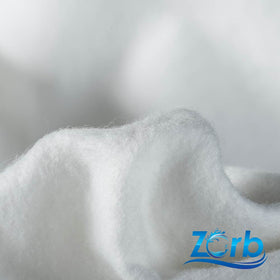
the fast super-absorbent core — the classic pairing for cloth diapers, inserts, and pads. Zorb catches; ProSoft holds the line beneath it.

W-234Zorb 3D Bamboo Dimple

a soft natural-fiber absorbent layer when you want a bamboo face and body in the same piece.

The skin face (optional, topmost)

W-262ProTEC Microfleece

a hydrophobic stay-dry layer so skin feels dry through long wear, over the absorbent core.

W-434ProCool Dri-QWick Jersey Mesh

a smooth athletic-wicking face for period products and body-worn builds.

Proven stacks

Cloth diaper / all-in-one

Core + barrier

skin faceStay-dry topper (optional)
coreZorb Original
barrierProSoft 1 mil ECO-PUL

The classic build: Zorb catches, ProSoft holds. Add a stay-dry topper if the skin side needs to feel dry through long wear.

Reusable menstrual pad

Soft face, sealed edge

skin sideBamboo / ProCool face
coreZorb Original
barrierProSoft 1 mil ECO-PUL

The waterproof backing under an absorbent core. A single thin barrier keeps the pad trim while it holds the line.

Wet bag / pail liner

Standalone, seams sealed

one layerProSoft 1 mil ECO-PUL

On its own, with taped or enclosed seams and a zip — it holds liquid in. This is the build where sealing the seams is not optional.

Your results may vary with design, construction, and end use — and if you find a stack we haven’t listed, tell us. That’s how most of these were found.

Planning your yardage

It runs 58″–60″ wide. For heavy or overnight use, add absorbency in the core (more Zorb) rather than doubling the barrier — one waterproof layer is already waterproof. If you need a tougher, thicker shell, step up to the 2 mil ECO-PUL rather than layering two 1 mil sheets.

From the workbench

Clips, not pins — and seal your seams. Those two, every time. Everything else about sewing this is forgiving.

The keeping

The bond is permanent — and only a few things can end it.

The waterproofing is the fused film itself, not a finish that wears off. Treated right, the barrier is rated through 300+ wash cycles — it outlasts almost anything you sew it into.

Wash

Hot water is safe — rated to 145–165°F — though warm water extends the film’s life. Use a zero-residue liquid detergent. Add an extra rinse to clear detergent residue, which accumulates on and degrades the film over time.

Dry

Low to medium heat only — never above 130°F (50°C). Above that, the polyurethane breaks down: stiffening, then cracking, then delamination. Line drying is always safe.

Protect

Shield the film side from direct agitation where your construction allows — it extends the barrier’s life. The waterproofing is the film itself, so what protects the film protects the fabric.

Avoid — the destroyers, in order of consequence

01
Fabric softenerCoats the film and eliminates both the waterproofing and the breathability. The damage is irreversible. No recovery.
02
Dryer sheetsThe same coating, from the dryer side. Same ending. Makers who’d never pour in softener sometimes toss in a sheet without connecting the two.
03
Chlorine bleachBreaks the laminate bond — the film separates from the knit. What the heat fused, chlorine unfuses.
04
Dryer heat above 130°FThe film stiffens, then cracks, then delaminates. Each stage is damage, and the sequence doesn’t reverse.
05
VinegarBreaks down the laminate bond on this fabric. A care remedy on some fabrics in this house — the opposite here.
06
Baking sodaSame consequence as vinegar. Keep both out of the wash for anything with this barrier in it.
One nuance worth knowing

When a maker tells us a PUL failed, the culprit is almost always the drying cycle. Get the wash and dry right and the bond you were promised is the bond you keep.

Before it meets food

Wash it before its first food use, the way you would any new food-contact item. After that, the care is exactly the Standard’s: zero-residue liquid detergent, low dryer heat, and none of the destroyers — the same short list that protects the bond protects the food-safe surface.

One more time

If you remember two things: no fabric softener, and no high heat. Those are the only ones I’ll repeat.

The makers

What people make with it — food-safe, and recycled.

FoodSAFE REPREVE is reached for when a food product also has to answer for its materials — the only PUL that meets food and carries verified recycled content. Here’s where it’s working.

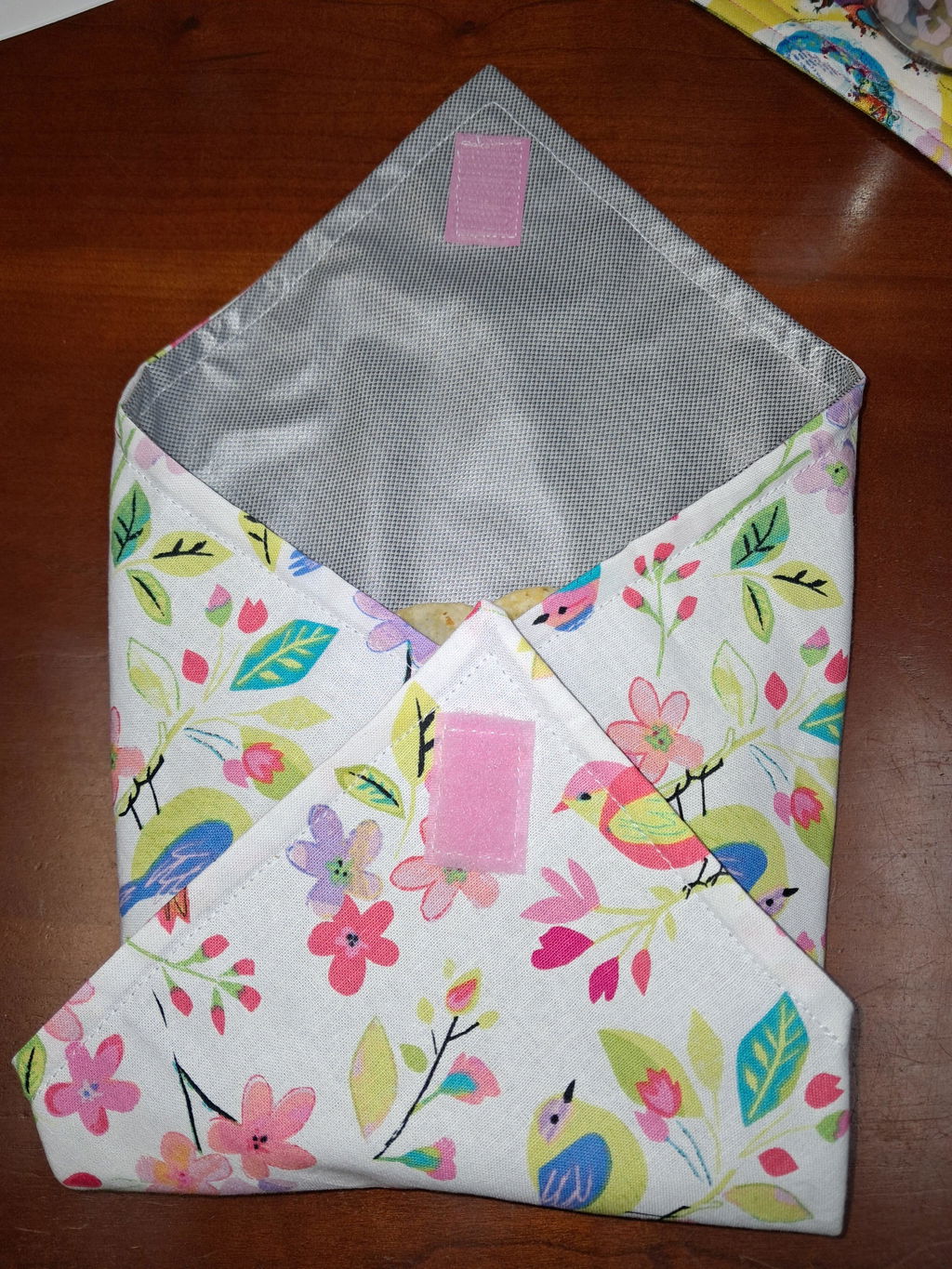
Reusable snack & sandwich bags

food-safe interior on a recycled base — the sustainability story and the food story in one bag.

Bowl covers & food wraps

reusables that meet food directly, for brands that must prove recycled content too.

Retail food goods with a sourcing story

where "certified food-safe" and "recycled" both have to appear on the label.

Lunch & container linings

the food-safe, recycled interior of soft food carriers.

Pet feeding mats & cage liners

washable, food-contact surfaces where recycled content is a bonus makers value.

Institutional & program buyers

sourcing policies that require both food-contact certification and recycled content.

Knowing my loved ones are safe.a FoodSAFE mother — the word is knowing, not hopingProSoft FoodSAFE
The only fabric she has found certified for food use.a FoodSAFE maker — why she chose itProSoft FoodSAFE

If your use isn’t on the list, it might be the next entry.

Order a swatch, test it against your product and your sourcing requirements, and tell us what you found. This is the one that answers for both the food and the material at once.

Frequently spoken answers

Every question, answered in full.

The questions makers actually ask — answered the way we’d answer them at the counter. And two answered by the founders themselves.

Q1How is this different from the other ProSoft PUL variants?

Standard is the same barrier without food certification or a recycled base. This one carries FDA food-contact certification on a certified recycled base (REPREVE, ~12 bottles/yard) — the only recycled-content PUL certified for direct food contact; the others add antimicrobial, surface repellency, print, or a heavier weight.

Choose Standard when your project doesn’t need one of those specific dimensions — which is most of the time.

Q2Do I use it on its own, or with other fabrics?

It depends on the job. It’s a barrier, not an absorber — so for anything that catches fluid (diapers, pads), pair it with an absorbent core above it (like Zorb).

For a wet bag or pail liner, it works on its own — one layer, with the seams taped or enclosed so nothing escapes.

Q3Does it have a smell?

Sometimes, fresh off the roll — a faint manufacturing odor from the thermal bonding process. It isn’t a chemical to worry about, and it airs out with a wash and some time in open air. Being honest, for a few people it fades rather than vanishing instantly — if yours arrives with a scent, wash it and let it breathe before you cut.

Q4Will it delaminate?

Only from the things on the Care tab — fabric softener, dryer sheets, chlorine bleach, vinegar, baking soda, high dryer heat. With a zero-residue liquid detergent and low dryer heat, the bond holds through 300+ wash cycles. Delamination on this fabric is almost always a care story, not a fabric story.

Q5Which side faces out?

Face the film side toward the moisture — the side the wet reaches. The knit side is the side you’ll usually want against skin or showing.

Q6Do I need the Silver (W-274) version?

Only if your project goes hours between washes — overnight diapers, pads worn through a long day, pet bedding that sits. Silver Plus works in those hours. If you wash after every use, the washing does that job, and the Standard does everything else identically.

Q7Is it really certified to touch food?

Yes — that’s the whole reason this variant exists. It carries FDA food-contact certification under 21 CFR 177.1680 and 175.300 for repeated-use food storage, and both the fabric and the film sides are tested safe for direct contact with all food types, from freezer temperatures to 250°F. Build it with either side facing the food. The Standard (W-375) performs identically on waterproofing but isn’t certified for food — so when food touches the fabric, this is the one that lets you know rather than hope.

Q8What exactly is certified — and does it cover my finished product?

The fabric is certified; your finished item is yours. The certification is FDA food-contact under 21 CFR 177.1680 and 175.300, both faces, all food types, freezer to 250°F — verified at the fabric level. How you construct, seal, and finish your product is on you, and depending on your build it may need its own review. The validation begins with the fabric; it lands with the person you sew for.

Q9Can I return it if it’s not right?

It’s cut to order, so it can’t be returned once cut — which is exactly why we’d rather you start with a swatch. A swatch is a few dollars and it answers the question in your hands before you commit a yard.

Founder’s answer · from the mill floor

Why does the bond last when glued PUL fails?

Because we don’t glue it. We fuse the film to the knit with heat — ECO-Thermal Bonding — so there is no adhesive layer sitting between them. What fails on other PUL is the glue: it softens in hot washes and lets go, and the film peels. Ours has no glue to fail. That’s the whole reason the bond is permanent — not a coating we added, but a layer we left out.

— Sid

Founder’s answer · from the counter

Is it really waterproof if it breathes?

That’s the question that sounds like a contradiction, and it isn’t. Waterproof means liquid water can’t get through — and it can’t, even under real pressure. Breathable means water vapor can pass — and it does, about 850 grams a day. They’re different sizes and different rules: the flood stays out, and a body can still breathe against it for hours. Don’t take my word for it — drop water on the film side and then hold it up to your breath. The water stays out; the warmth passes through.

— Arch

Fabrics Specifications

View File (PDF)

Bulk Price Discounts

View File (PDF)

Declaration of Conformity for ProSoft Food Safe PUL

View File (PDF)

No Returns Policy

All our orders are custom and cut to size. Due to the nature of our process, we are unable to accept any returns or exchanges.


Warranty Info
  • Natural Fiber Fabric Variations: All natural fiber fabrics may present small holes, runs, etc. This is a natural characteristic of these materials, and out of our control. We proactively include extra yardage to compensate for any such imperfections.
  • Fabric and Roll Variability: All bolts & rolls may exhibit a +/- 10% variation. Our discounted pricing accounts for any discrepancies, ensuring value for our customers.
  • Seams and Damage Allowance: Bolts & Rolls may contain seams or marks from the manufacturing process. Extra yardage is always provided to account for this.
  • Custom Cut Products: All fabrics and sewing accessories are precisely tailored to your specifications, making them non-returnable.
  • Packaging Variations: Snaps & some elastics are packaged by weight, hence count is approximate. Our pricing reflects these minor quantity discrepancies.
  • Waterproof Fabric Aesthetics - Our waterproof fabrics are designed primarily for their functional attributes, ensuring they provide effective moisture barriers for a variety of applications. Due to variations in the manufacturing process and the availability of materials, the waterproof side of the fabric may display aesthetic inconsistencies, including but not limited to variations between shiny or matte finishes, as well as differences in texture such as dot matrix or fluid matrix patterns. These variations do not affect the functional integrity of the waterproof barrier. We understand the importance of both function and aesthetics for your projects and strive to provide fabrics that meet your needs while ensuring the highest quality and performance.
  • Wash and Care Instructions: To preserve the integrity and performance of our fabrics, please follow the provided care guidelines. Improper care may affect fabric performance.
  • Performance Under Various Conditions: The efficacy of our specialty fabrics (waterproof, absorbent, etc.) may evolve with environmental factors and wear. We design our products to deliver sustained performance.
  • Product Improvements: We continually strive to improve our products for better performance and sustainability. As such, you may receive a product that has been slightly updated from what is shown in our product images. These improvements are part of our commitment to innovation and delivering the best quality to our customers.

Specs Disclaimer

This information is obtained by industry accepted test methods and represents typical data. Please work with a +/- 10% variation from any of the aforementioned specs. Nothing contained herein is to be construed as permission or recommendation to infringe any patent. It is furnished for your general information only and does not represent a warranty or guarantee of Wazoodle Fabrics.

  • Fabric Content: The components of the fabric. Note that variations in fiber blend percentages may occur within a +/-10% range.
  • Fabric Weight: The mass per unit area of the fabric, typically expressed in grams per square meter (gsm) or in ounces per square yard (osy). Expect a possible variation of +/-10% from the stated weight within the same sku from different lots as well as different colors within the same product style.
  • Fabric Thickness: The measured thickness of the fabric in millimeters or inches. As with other metrics, this can vary by +/-10%.
  • Fabric Shrinkage: Percentage of reduction in dimensions after washing and drying. Shrinkage can vary, so anticipate up to +/-10% difference from the data provided.
  • Fabric Stretch: The elasticity of the fabric and its ability to return to its original size after stretching. Please allow for a +/-10% variation in stretch capabilities.
  • UPF Rating: Indicates the Ultraviolet Protection Factor offered by the fabric. Variations in protection levels can occur, and a +/-10% variation should be considered.

Wazoodle Fabrics makes no representations, collateral agreements, conditions or other warranties of any nature or kind, express or implied, with respect to such information or product and assumes no responsibility as to the accuracy or the suitability of the information or product for purchaser’s intended uses. The purchaser should conduct its own tests to determine the suitability of the material for their particular application.

The foregoing statements shall supersede the terms and conditions, whether express or implied, of any separate agreement of purchase and sale between Wazoodle and the purchaser.


Absorption in Fabrics

We strive to provide high-quality fabrics suitable for a diverse range of applications. It is important to note, however, that we do not perform absorption testing on our fabrics. The absorbency of any fabric can be significantly influenced by the design and construction of the final product in which it is used.

Key Points:

  1. Product Design Influence: The ultimate absorption capacity of a fabric in a finished product depends heavily on the product's specific design and construction. Variations in design can lead to significant differences in performance.

  2. Recommendation for Testing: We strongly recommend that customers conduct their own testing to determine the absorption characteristics of our fabrics in conjunction with their product designs. This testing should consider all elements of product design and the interaction between different materials.

  3. Interactions with Other Materials: The performance of our absorbent fabrics can be affected by the use of additional layers or materials. For instance:

    • Adding a cotton top layer may enhance the overall absorption capability.
    • Integrating a moisture-wicking layer can facilitate rapid moisture dispersion, potentially reducing compression leaks and influencing perceived absorbency.
  4. Variability in Performance: Due to the myriad of factors that can influence the absorbency of a fabric within a specific product design—including material combinations, construction techniques, and external conditions—we cannot guarantee specific results without proper testing.


Copyrights & Trademarks

AKASTiq® is a registered trademark of AKAS Tex.
Dri-QWick™ is a registered trademark of AKAS Tex.
ECO-PUL™ is a registered trademark of AKAS Tex.
ProCare® is a registered trademark of AKAS Tex.
ProCool® is a registered trademark of AKAS Tex.
ProECO® is a registered trademark of AKAS Tex.
ProSoft® is a registered trademark of AKAS Tex.
Stretch-FIT™ is a registered trademark of AKAS Tex.
TransWICK™ is a registered trademark of AKAS Tex.

SILVADUR™ is a registered trademark of DuPont de Nemours, Inc.

REPREVE® is a registered trademark of Unifi, Inc. 

COOLMAX® is a registered trademark of The LYCRA Company.
Lycra is a registered trademark of The LYCRA Company.

Zorb® is a registered trademark of Wazoodle Fabrics.

Can I use your brand information on my products?

Yes, it is possible, however please see the Licensing FAQ for all the requirements.

Made in USA

Proudly committed to American craftsmanship, every fabric we offer is designed, sourced, and manufactured in the USA, ensuring top quality, supporting local jobs and low carbon footprint.

Eco-Friendly

Each eco-friendly fabric from Wazoodle is a statement of sustainability, designed to leave a gentle footprint on the earth while providing consumers with high-quality textile options.

Recycled

Wazoodle's recycled fabrics are a green triumph, transforming discarded materials into luxurious textiles, and offering consumers a chance to partake in a sustainable fashion movement.

PFOS Free

With PFOS-free fabrics, Wazoodle takes a stand against persistent pollutants, offering textiles that are safer for both customers and the ecosystem. PFOS = Perfluorooctane Sulfonate

PFOA Free

PFOA-free fabrics at Wazoodle underscore their commitment to non-toxic textiles, aligning with their pledge for environmental and consumer well-being. PFOA = Perfluorooctanoic Acid.

BPA Free

Wazoodle ensures that our BPA-free fabrics maintain the highest safety standards, free from controversial chemicals that are used to make plastics, for customer peace of mind. BPA = Bisphenol A.

Breathable

Wazoodle's Breathable fabrics are a top choice for activewear manufacturers. They allow for effective moisture and air passage, crucial for maintaining comfort during physical activities.

Hypoallergenic

Wazoodle's hypoallergenic fabrics are specifically designed for those with sensitive skin, offering a soothing touch that is free from common allergens and irritants, ensuring comfort and safety.

Food Safe

Wazoodle's Food Safe fabrics meet the stringent requirements of 21 CFR Part 175 for repeated food contact at various temperatures; can safely come into contact with food, preventing contamination.

Waterproof

Wazoodle's Waterproof fabrics offer complete moisture protection. These materials ensure that items stay dry in wet conditions, providing reliable leakproof protection, performance and durability.

Child Safe

Wazoodle's child-safe fabrics are rigorously CPSIA tested and approved; making them perfect for creating a worry-free environment for children and prioritizing the health and safety of our little ones.

CPSIA Certified

Wazoodle Fabrics ensures reliability and trust by adhering to the stringent CPSIA safety standards set by the CPSC in 2008, certifying all our American-made textiles for consumer confidence.

Recycled Polyester

Wazoodle’s recycled polyester fabrics are a symbol of environmental stewardship, crafted from upcycled plastics to reduce landfill waste and fossil fuel use. In collaboration with REPREVE®

Vegan

Wazoodle Fabrics caters to the compassionate consumer with the collection of vegan fabrics, ensuring no animal products are processed or used, aligning with ethical fashion and manufacturing principles.

Latex Free

Wazoodle's Latex-free fabrics are a boon for allergy sufferers, offering responsible and high-quality textiles without the risk of latex-induced reactions that can have an adverse effect on the health

Chemical Free

Wazoodle's commitment to safety and sustainability is evident in our chemical-free fabrics that provide a safe, non-toxic textile choice, reflecting dedication to health and the environment.

Our Sustainability Initiatives:

Sourcing the best materials and locally

We source fibers and yarns within the United States mostly direct from local mills.

Commitment to not use harmful chemicals in the fabrics

No PFAS, PFOA, lead, dioxins, heavy metals, BPA, phthalates, formaldehyde or nanoparticles.

Responsible partnerships with Vendors

We establish partnerships with vendors keeping an eye on the sustainability of their processes.

Creating food safe, durable, easy-to-reuse fabrics

 Certified for food contact and storage per 21 CFR 175.300, meeting stringent standards.

Safe working conditions and fair labor practices

Made in US mills with safe workplace practices and fair wages following all labor regulations.

Manufacturing processes that do not create harmful waste

Closely controlled facilities and EPA-compliant processes that do not pollute the environment.

We're here to help you Find the Right Fabric for Your Project

Here to help you

Are you overwhelmed with the choices available? Or not sure which product will work for your application? 

Drop us a detailed message and we'll help identify the Right Fabric for YOU! 

Contact Us
wazoodle fabrics logo