What's New at Wazoodle
What's New
The fabric · what it is, and what your hand already knows
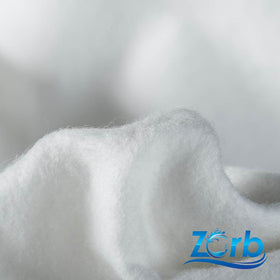
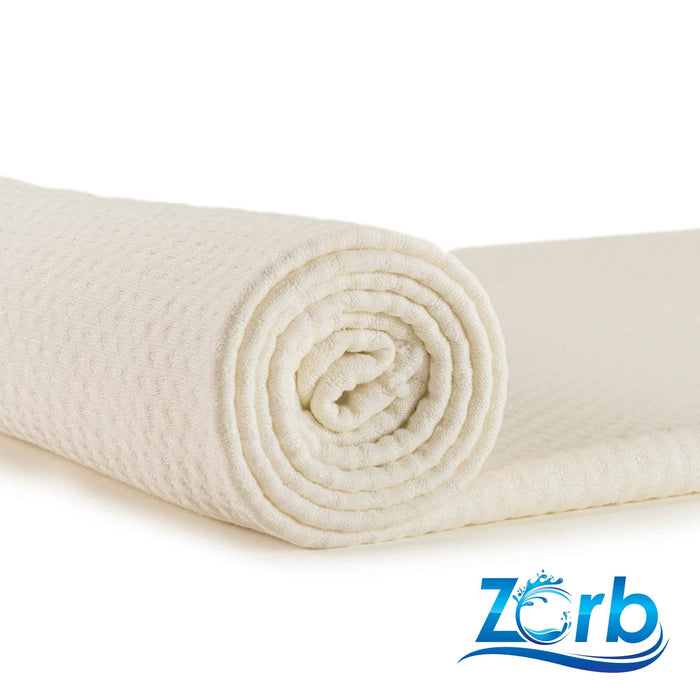
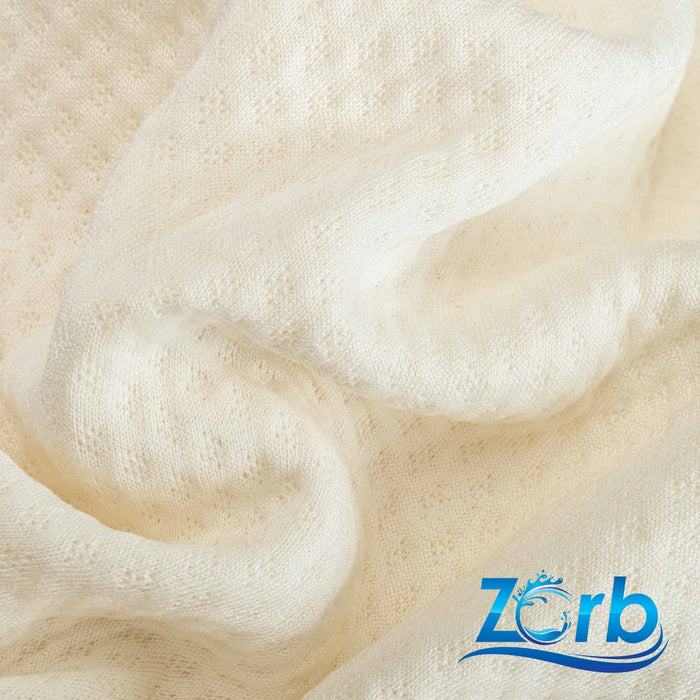
Pick it up and your hand knows the LITE first: there's almost nothing here — thin, soft, the disappearing weight you'd reach for when bulk is the enemy. Everything the LITE is, this is.
What sets it apart is a certification, not a feel. This version is FDA food-contact certified — cleared for the places the other weights aren't: against food, against breast milk, against a baby's mouth. So the thin, soft absorbency you'd use for a liner or a slim pad becomes the fabric you can also trust for a teething pad, a bib that meets the mouth, a food-contact cloth. The thinness your hand feels; the food-safe clearance is the reason to choose this one over a plain LITE.
So what would you want in the thinnest fabric that also has to meet a mouth?
The disappearing thinness of the LITE — slim enough for liners, boosters, and slim pads, soft against skin, fast to absorb. And a certification the other weights don't carry: FDA food-contact clearance, so it's trusted where food, breast milk, or a baby's mouth are in play. The same honest limit as the LITE applies — two thin layers won't hold a heavy flow — but where the job is thin and oral- or food-contact, this is the one.
One of these you can test in a minute with a swatch. The other is on paper — and that's the point.
Feel how little there is
Closer to a lining than a pad.
Rub it between two fingers — barely there, soft, drapey, nothing like a bulky quilted absorbent. Then pour a spoonful of water on a swatch: under two seconds it's gone, into a layer you'd have sworn was too thin to hold anything. Thin in the hand, thirsty in practice — that's why makers reach for it.
Then read the certification
The difference here is on paper, not in the hand.
You can't feel a certification — but it's what makes this version its own thing. It's FDA food-contact certified under 21 CFR 177.1680 and 175.300, its migration validated under eight conditions including heat sterilization above 212°F and frozen storage at −20°C. That's the clearance to meet food, breast milk, and a baby's mouth — documented, not just claimed.
This is the one variant we'd never ask you to take on faith. The food-contact clearance is documented, not just described — and a swatch lets you test the thinness and the absorbency in your own hands before you commit a yard. Proof on paper, and proof in the hand.
Also in this family — same core construction, different weight or finish
Bamboo Dimple LITE is the same thin 340 GSM weight without the FoodSAFE certification.
→Bamboo Dimple Standard FoodSAFE (475 GSM) — the versatile weight, same certification.
→Bamboo Dimple LITE Silver adds Silver Plus antimicrobial for odor control.
→FoodSAFE comes in two weights — this LITE and Standard. Unsure which is yours? Tell us what you're making — we'll point you to the right one.
The thinness you can feel; the food-contact clearance is on the certificate. For anything that meets food or a mouth, that's the difference.
The truth · how it absorbs
The absorption engine every Bamboo Dimple shares runs here too — drawn to its slimmest — and it turns on two things happening together, fast. What this version adds isn't a second technology; it's a certification. Here's the science, then the paperwork.
Liquid has to enter the moment it lands, before it can travel to an edge and escape — here, roughly 20× faster than a plain bamboo or cotton knit. The bamboo-viscose-and-cotton surfaces pull it straight in, no plastic wick, no barrier, and the cellulosic fibers hold it.
What's captured has to spread in three dimensions, so the landing zone doesn't flood while the rest sits dry. The Zorb 3D core moves and distributes it through the structure. The dimple is part of the machine, not decoration: raised peaks stay relatively dry against skin, valleys carry the moisture away.
Most absorbent fabrics need conditioning washes before they perform. This one is industrially pre-washed — a process we call Ready-AbZORB — so it absorbs fully from the very first use. You'll still run it through one wash before you cut, but that's for the shrinkage, not to wake it up. A first test succeeds instead of confirming a skeptic's doubt.
This fabric drinks moisture in at its surface rather than pushing it away. That's exactly why it's chosen against sensitive skin — soft and natural, not a plastic wick — but it also means the surface feels damp while it's working. If you need skin to stay dry through long wear, add a stay-dry topper above it and you get bamboo absorption with a dry face. And there are no super-absorbent gels in here: every drop it holds, it holds in the fiber itself.
This version is FDA food-contact certified, under 21 CFR 177.1680 and 175.300. Its migration was validated under eight conditions — including heat sterilization above 212°F and frozen storage at −20°C — so it holds up across the real range of food and feeding use, from boiling to the freezer. That's the clearance the other weights don't carry: for food contact, for breast-milk storage, for a baby's mouth. One honest boundary: the certification covers the fabric, not your finished product — depending on construction, your finished item may still need its own testing.
Certified — and free of what shouldn't be there
Zorb 3D Bamboo Dimple is CPSIA certified — Consumer Product Safety Improvement Act, sections 101 and 108, 16 CFR Part 1303 — the mandatory U.S. federal standard for children's products. Also: US Cotton Trust Protocol (organic cotton content), California Prop 65 compliant, EU REACH SVHC compliant, EU RoHS 10 compliant, and UPF 50+ (blocks 98% of UV). Made in the USA by AKAS Tex.
no PFAS · PFOA · PFOS · PTFE
DEHP · DBP · BBP · DINP · DIDP · DnOP verified
bamboo viscose + organic cotton, plant-derived
SAP-Free is the one worth pausing on: the absorbency comes entirely from engineered fiber structure — no super-absorbent polymers, no chemical gels. That's the difference between this and the disposable category built on SAP.
CPSIA certification of the fabric does not automatically certify your finished product. Depending on how you construct it, your finished item may need its own testing. The validation begins with us. It passes through you. It lands with the person who receives what you made — and now you know exactly what to tell them.
From Arch
The full truth — before you buy
I want you to know a few things before you buy this, because I'd rather you hear them from me than find them in your laundry room.
About 5–6% in both directions the first time it's washed and dried — more than the polyester versions, and enough to surprise sewers who've been at it for years. Pre-wash a piece, then cut to your finished size after — never before.
Chlorine bleach degrades the bamboo and cotton fibers — and on the Silver version it destroys the antimicrobial. For stains, reach for an oxygen-based stain remover instead, occasionally, never as routine.
Softeners and dryer sheets coat the fiber with a water-repelling residue that destroys absorption permanently. Not reduced. Gone. Nothing else on this page matters if softener touches it.
So it feels damp while it's working — the honest cost of a soft, natural face. If you need dry-against-skin through long wear, put a stay-dry topper above it. Choose it for softness and fast absorption; layer for dryness.
Depending on how you build it, your item may need its own testing. That boundary is real, and respecting it protects the people you sew for.
Years ago I went looking for what was actually inside the fabrics people sew against the most vulnerable skin there is. I found things I didn't want to find — PFAS, BPA, phthalates, the forever chemicals that never leave. People kept asking whether ours were free of them. I already made sure they were. None of it is in here — the absorbency you feel is fiber and structure, and nothing else.
Zorb 3D Bamboo Dimple is made in the USA by AKAS Tex — our family's manufacturing company — in EPA-compliant facilities under fair labor standards, finishing in Bensalem, Pennsylvania.
Sew well.
Bensalem, Pennsylvania
Specifications
Zorb 3D Bamboo Dimple — LITE FoodSAFE weight (W-477), the thinnest weight in the family with FDA food-contact certification: made for teething pads, bibs, food-contact cloths, and feeding items.
| Specification | W-477 · LITE FoodSAFE |
|---|---|
| Weight | 340 GSM (10 oz/sq yd) |
| Thickness | 0.050″ |
| Width | 59″–62″ |
| Fiber blend | 60% bamboo viscose / 40% organic cotton — both faces |
| Absorption speed | Under 2 seconds |
| Absorption capacity | 10× fabric weight |
| Layer equivalency | 2 layers = 6 layers flannel |
| Food safety | FDA food-contact certified — 21 CFR 177.1680 & 175.300; migration validated under 8 conditions (heat sterilization >212°F, frozen storage −20°C) |
| Stretch (width) | 20% |
| Stretch (length) | 5% |
| Shrinkage | 5–6% both directions (first wash) |
| Standalone use | Yes — no enclosure required |
| Treatments available | FoodSAFE (this) · Standard · Silver |
| pH | 7.4 (neutral) |
| UPF | 50+ (blocks 98% of UV) |
| CPSIA | Certified |
| Made in USA | Yes — AKAS Tex |
The workbench
Bamboo shrinks about 5–6% in both directions the first time it's washed and dried — noticeably more than the polyester versions, and enough that it catches experienced sewers off guard. Pre-wash a test piece, then cut to your finished size. Ready-AbZORB already did the absorbency conditioning industrially, so this pre-wash is purely for dimension and hygiene — not to make the fabric work. It works from the first use.
Cutting
It cuts cleanly, and the dimple texture frays very little at the edges — serge or finish them for anything headed into heavy laundering. It sheds a little lint as you cut and sew; keep a lint roller nearby, it's nothing unusual. Trace patterns directly onto the fabric.
Cut after the pre-wash, not before. The 5–6% shrinkage is real, and pattern accuracy depends on cutting the already-shrunk fabric to your finished dimensions.
Sewing
Walking foot — every time. The dimple texture feeds faster than the flat backing, and without dual feed it pulls unevenly. Needle: a ballpoint or stretch 90/14 needle for the LITE weight. Stitch length 3.5 — longer than usual, on purpose; it keeps the dimple from puckering.
LITE stretches about 20% across the width — so sew first, then cut. Assemble and stitch your fabric layers together, then trim the piece to size; cutting to exact dimensions first lets the stretch distort your shape. (This is the tip a bib-maker taught us, and it holds across the LITE line.) It also quilts and dyes: it takes embroidery-floss quilting through cotton batting the way makers build quilted pet beds, and it hand-dyes well, holding good texture and volume after the dye bath.
Zorb 3D Bamboo Dimple stands on its own as an absorbent layer — but for a finished product you'll often pair it with a surface above and a barrier below. What you choose determines the finished feel.
Above (skin side)
the soft bamboo surface is made for direct skin contact — the main reason makers choose it over a stay-dry fabric. Peaks stay relatively dry, valleys carry liquid away.
a hydrophobic stay-dry layer for when you want bamboo absorption with a dry face — the benefits of both dimple families in one.
a smooth athletic-wicking surface for menstrual products where a flat jersey feel is preferred over dimple or fleece.
Below (barrier side)
for inserts placed inside a waterproof diaper cover, it works standalone.
the standard waterproof backing for period pads, all-in-one diapers, incontinence products, and bed pads.
4-way stretch recovery for body-conforming products like period underwear and training pants.
Slim liner or panty liner
Lowest bulk
One LITE layer over a thin PUL backing makes a liner or light pad that stays trim — the low profile is the point.
Max-capacity insert
LITE faces, big core
LITE on the outside for soft bamboo contact, a Zorb Original core for maximum absorption — a customer-validated diaper-insert build.
Add-on booster
Extra capacity, minimal bulk
Drop one or two LITE layers into an existing diaper or pad when you need more absorbency without much added thickness.
Your results may vary with design, construction, and end use — and if you discover a stack we haven't listed, tell us. That's how most of these were found.
LITE is built to be layered — two layers do the work of six layers of flannel, and you can stack more, or combine it with other Zorb types, for extra capacity without much bulk. It runs 59″–62″ wide. For heavy wetters, overnight, or heavy incontinence, step up to Standard or Heavy Duty rather than stacking many LITE layers.
From the workbench
Pre-wash before you cut. The shrinkage catches even experienced sewers — cut to your finished size after that first wash, never before.
The keeping
The absorbency is engineered into the fiber, and it actually improves over the first few washes as the structure opens. Makers have documented 300+ wash cycles with no loss. Treat it right and it outlasts almost anything you sew it into.
Medium temperature, with a zero-residue detergent — free of perfumes, dyes, UV brighteners, and enzymes.
Medium heat. Reshape it while it's still damp if it needs it — bamboo viscose can relax a little in the wash.
Pre-wash for hygiene on anything that touches a body — and once before cutting, for the 5–6% shrinkage. If buildup ever dulls absorbency, strip-wash: hot water, minimal detergent, and it comes back.
Avoid — the destroyers, in order of consequence
For stains, use an oxygen-based stain remover rather than chlorine bleach — occasional treatment, never routine. Unlike the polyester Stay Dry Dimple, no bamboo variant tolerates chlorine bleach at all.
Its migration is validated for heat sterilization above 212°F — so unlike the Silver version, this fabric tolerates high-heat sanitizing (boiling or steam) when a food or feeding use calls for it. Routine care stays simple: wash warm, dry on medium, and never use chlorine bleach, which degrades the bamboo and cotton.
One more time
If you remember two things: no fabric softener, and no bleach. Those are the only ones I'll repeat.
The makers
LITE FoodSAFE is the thinnest weight, carrying an FDA food-contact certification the others don't. Here's where that clearance matters.
teething pads and anything that meets a baby's mouth — the certification is made for exactly this.
drool and feeding bibs, feeding cloths, placemats — food-contact clearance where a plain LITE can't claim it.
reusable liners and wraps for breast milk and food — validated from heat sterilization down to frozen storage.
reusable food wraps, straining cloths, kitchen absorbers that touch food directly.
the same thin, absorbent LITE profile for liners and slim pads — now cleared for oral- and food-contact uses too.
for makers who need the certification on file to sell feeding or food-contact products with confidence.
This is one of the newer variants in the family, so there isn't yet a wall of maker reviews to show you. What it has instead is the documentation above — and the same thin, proven LITE fabric underneath the certification.
If your use isn't on the list, it might be the next entry.
Most of the applications above, makers found on their own. Order a swatch, test it on the problem you're holding, and tell us what you found — even if the answer was no. That's how most of this list arrived. And if your group sews reusable pads for donation, we'd be glad to help you plan the yardage — because the fabric absorbs from the first use, it works the moment it's unfolded.
Frequently spoken answers
The questions makers actually ask — answered the way we'd answer them at the counter. And two answered by the founders themselves.
Three dimple families, one choice. Bamboo (this one) has bamboo-viscose-and-cotton surfaces — natural-fiber softness that absorbs directly at the surface. Stay Dry has hydrophobic polyester surfaces that wick moisture away, so skin feels dry through extended wear. Organic Cotton is 100% cotton — the purest natural option.
Choose Bamboo when soft, natural, fast absorption matters most; choose Stay Dry when surface dryness through long wear is the priority; choose Organic Cotton when 100% cotton purity is required.
It stands alone. Unlike Zorb Original, Bamboo Dimple can be cut, edged, and used as a finished absorbent layer with no enclosure required — the soft bamboo surface is meant to be seen and touched.
For a finished waterproof product, add a PUL barrier below (like ProSoft 1 mil ECO-PUL). If you need the skin side to stay dry through long wear, add a stay-dry topper above it.
Yes — about 5–6% in both directions on the first wash, noticeably more than the polyester versions, and enough that it surprises experienced sewers. Ready-AbZORB processing already reduces it substantially versus untreated bamboo and cotton, but you should still pre-wash a test piece before cutting a production run, and cut to your finished size after.
They're visually almost identical. If you have both in your workspace, measure the thickness to tell which is which.
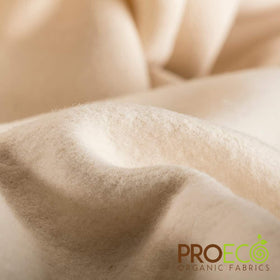
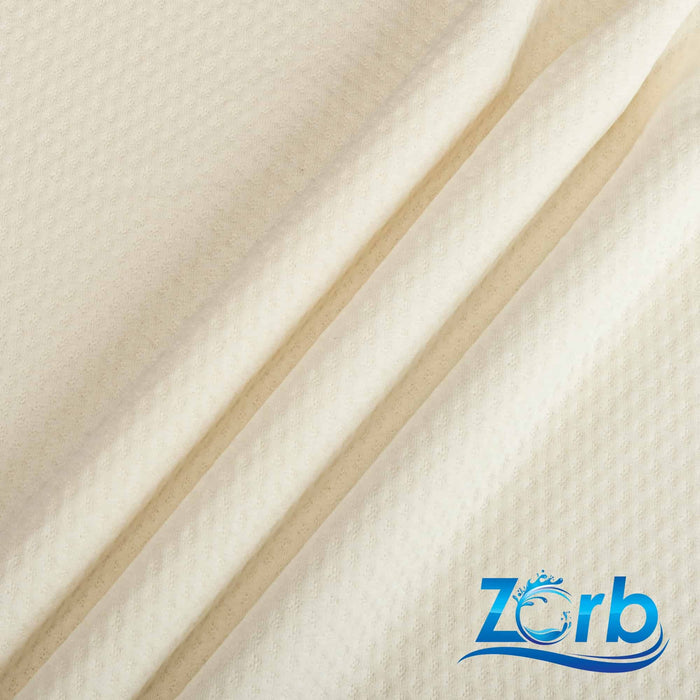
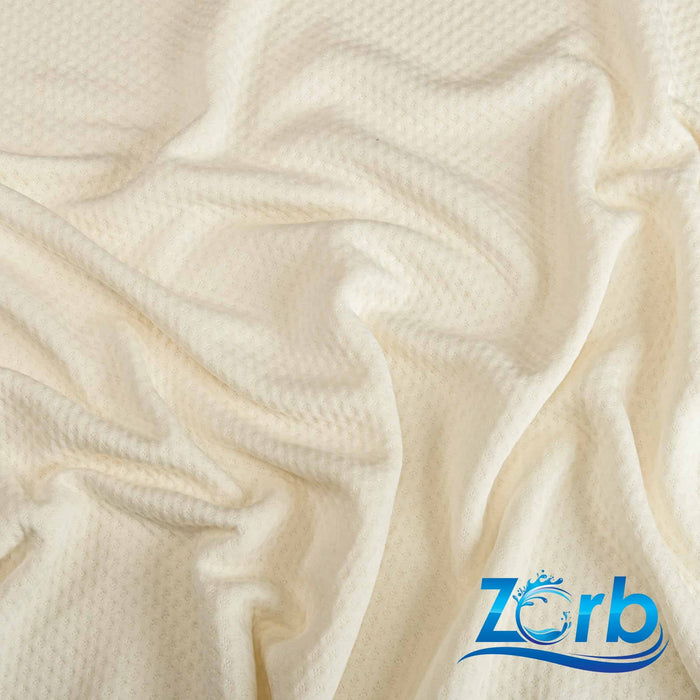
It ships in its natural, undyed bamboo color. It takes hand-dyeing well, though — good texture and volume after the dye bath — if you want to add color yourself for a branded or personalized line.
Yes — the soft bamboo surface is made for direct skin contact, which is exactly why makers choose it over stay-dry fabrics for sensitive-skin applications. For anything that meets a baby's mouth, use a FoodSAFE variant (FDA food-contact certified).
LITE (340 GSM) is this one — the thinnest and lowest-bulk, built for liners, slim pads, and layering where minimal bulk matters. Standard (475 GSM) is the balanced, most versatile weight for standalone cloth pads, diaper inserts, and nursing pads. Heavy Duty (625 GSM) is maximum capacity — heavy wetters, overnight, bed pads, postpartum. This LITE is the FoodSAFE version, FDA food-contact certified — see the next question.
Food and oral contact — documented. This version is FDA food-contact certified under 21 CFR 177.1680 and 175.300, with its migration validated under eight conditions, including heat sterilization above 212°F and frozen storage at −20°C. That's what clears it for the uses a plain LITE can't claim: food contact, breast-milk storage, and a baby's mouth. The honest boundary: the certification covers the fabric, not your finished product — depending on how you construct it, your finished item may still need its own testing. Don't need the clearance? The same thin fabric without it is LITE Standard.
The fabric is CPSIA certified — sections 101 and 108, 16 CFR Part 1303 — plus California Prop 65, EU REACH SVHC, EU RoHS 10, and UPF 50+. The absences are verified: SAP-free, forever-chemicals-free, phthalate-free, BPA-free, lead-free.
The honest boundary: certification covers the fabric, not your finished product. Depending on construction, your finished item may need its own testing.
Founder's answer · from the mill floor
Why does it absorb ten times its weight when bamboo alone can't?
Because absorption is two jobs, not one — and natural fibers only do one of them. Bamboo viscose and cotton love water; they hold. But holding isn't enough: liquid has to enter in under two seconds, before it travels to an edge and escapes, and it has to spread in three dimensions so the landing zone doesn't flood while the rest sits idle. That's what the Zorb 3D core does — Hydro-Dual Fiber Technology captures and distributes what the bamboo surfaces hold. Two layers doing the work of six layers of flannel, and 20 times faster than a plain bamboo knit — with no super-absorbent polymers and no gels. The structure is the technology.
Founder's answer · from the counter
It's so soft — is it really that absorbent?
That's the question we hear most, and I understand it: your hand says comfort, so your mind expects a comfort fabric. But the softness isn't a layer on top of the absorbency — it is the absorbent surface. The same bamboo face that feels gentle is the one drinking ten times its weight in under two seconds. Makers tell us it's “hard to believe it's so absorbent,” and then they order more. Don't take my word for it — order a swatch and pour water on it. The softness will convince your hand; the water will convince the rest.
We source fibers and yarns within the United States mostly direct from local mills.
No PFAS, PFOA, lead, dioxins, heavy metals, BPA, phthalates, formaldehyde, nanoparticles or super absorbent polymers (SAP).
We establish partnerships with vendors keeping an eye on the sustainability of their processes.
Engineered with a unique knitting construction without using SAP, so your end product stays absorbent for its’ lifetime
Made in US mills with safe workplace practices and fair wages following all labor regulations.
Closely controlled facilities and EPA-compliant processes that do not add waste or pollute the environment.
Are you overwhelmed with the choices available? Or not sure which product will work for your application?
Drop us a detailed message and we'll help identify the Right Fabric for YOU!